What the labels mean
Duvet vs Comforter: Which One You Actually Wash
A duvet is an insert plus a washable cover. A comforter is sewn as one piece. The UK calls both a duvet. Tog ratings tell you warmth; thread count does not.
Updated 18 Aug 2026 · 7 min read · duvet vs comforter
Insert plus cover versus sewn-through
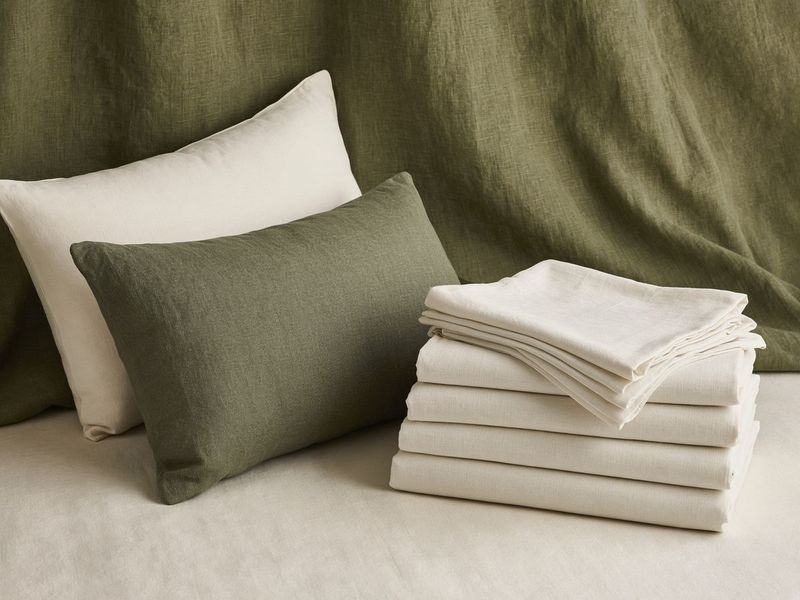
A duvet system is two objects. The insert is the warmth. The cover is the surface you see and the thing that takes body oil, which is why you can keep a $200–400 down insert for a decade and spend $40–80 on covers you actually launder. Ties or corner loops inside the cover keep the insert from rotating into a lump. If there are no loops, sew them on.
A comforter is quilted shut: fill, shell, and often a decorative face, stitched so the fill cannot migrate. It is simpler the day you make the bed. It is worse the day it is dirty, because you have to wash the entire object. Hotel bedding in the US is often a duvet pretending to be a comforter; hotels chose the washable cover for the same reason you should.
| Duvet (insert + cover) | Comforter (sewn) | |
|---|---|---|
| What you wash weekly | The cover | Nothing, until you face a laundromat |
| What you wash yearly | The insert, 1–2× | The whole comforter |
| Look change | Swap a $50 cover | Buy a new comforter |
| Warmth spec | Tog, or fill power + weight | “All season” copy, or weight |
| US vs UK word | UK default; US “duvet insert” | US default; rare in UK shops |
US versus UK terms, and tog ratings
If you grew up in the US, “duvet” may have meant a fancy comforter. If you grew up in the UK, a duvet is the bed, a cover goes on it, and a top sheet is optional to the point of eccentric. Import listings mix the words. Look at the product: does it have a hidden insert, or is it quilted to the face fabric?
Tog measures thermal resistance. 3–4.5 is a summer insert. 7–10.5 is the one-insert household default. 13–15 is winter or a cold house. Two inserts (a 4.5 plus a 9, for example) let you button them together. US down is sold on fill power (600, 700, 800) and fill weight in ounces. Fill power is loft per ounce, not warmth by itself — an 800-fill 12 oz insert can sleep like a 600-fill 20 oz, with less bulk. Ignore thread-count bragging on the insert shell; a 300-count down-proof cotton is the honest spec.
Washing a comforter versus a cover
A duvet cover is a duvet cover: regular laundry, with the sheets, on the schedule in how often to wash bedding. Choose a percale or sateen you already like on pillows so the bed matches. Cotton percale covers at 300–400 count in the $70–140 queen range last; a $25 microfiber cover pills into a shine.
A comforter or a duvet insert is a laundromat job unless you own a machine large enough for the fill to move. Under-filling a home washer leaves wet clumps that mildew. Use a large front-loader, extra rinse, low heat, and dryer balls. Down inserts: $150–400 to buy, so do not oven them on high. Polyester “down alternative” inserts are $40–80, survive hotter dries, and sleep a bit damper. Wool inserts ($200–350) want a wool cycle and a full dry; they are the least fussy about odor.
What to buy once
If you will wash bedding on a normal human schedule, buy a duvet system. One all-season insert (tog 10.5, or a US 700-fill of the right weight for your climate), two covers so one is always on the bed, and sheets you already trust. Put the second cover through the same decision you would for towels that last: fiber and construction, not a thread-count headline.
A comforter is the right buy for a guest room you dress twice a year, a kid who will wreck a cover’s buttons, or a budget that is $50 for the whole top of the bed. Do not spend $250 on a decorative comforter you cannot wash without a Saturday. That money is a duvet insert.
Questions, answered
- Is a duvet the same as a comforter?
- No, in US usage. A duvet is an insert in a cover. A comforter is sewn as one piece. In UK usage, “duvet” covers both the insert and the way most people make a bed.
- What tog should I buy?
- 10.5 for a typical insulated bedroom used year-round. 4.5 if you run hot or have summer only. 13.5 if the house is cold. Two lighter inserts that button together beat one furnace of a 15 tog.
- How often do I wash the insert?
- Once or twice a year if the cover is doing its job. Wash the cover with the sheets. If the insert smells, you have been too late on the cover.