Build it once
Build a Wardrobe from Zero After Weight Loss
The old clothes are not a backup plan. Measure now, buy a small set that fits this body, and stop waiting for the next number on the scale.
Updated 27 Aug 2026 · 9 min read · build a wardrobe from zero after weight loss
The closet is lying to you
Clothes from a previous size are not a safety net. They are a daily reminder and a bad fit. If a waistband needs the last hole, a jacket pulls at the button, or a dress hangs like a tent, it is not ‘saving it.’ Two pieces with a story can stay. The rest go to someone whose body they match.
If weight is still moving, buy fewer, cheaper, better-fitting items — not zero items. Walking around in a costume of the old body is how people delay living in the new one.
Measure this body, not the last one
Numbers on old tags are archaeology. Take chest, waist, hip, inseam, and — if you wear them — bra band and cup, this week. Write them down. Re-measure every eight to twelve weeks if things are still changing. The method is in how to measure yourself.
Try garments on. A size-down of your old brand is not guaranteed. Shoulders and length change less than waist; a jacket that fitted in the shoulder may still work with a tailor. Trousers usually do not.
A starter set, not a new personality
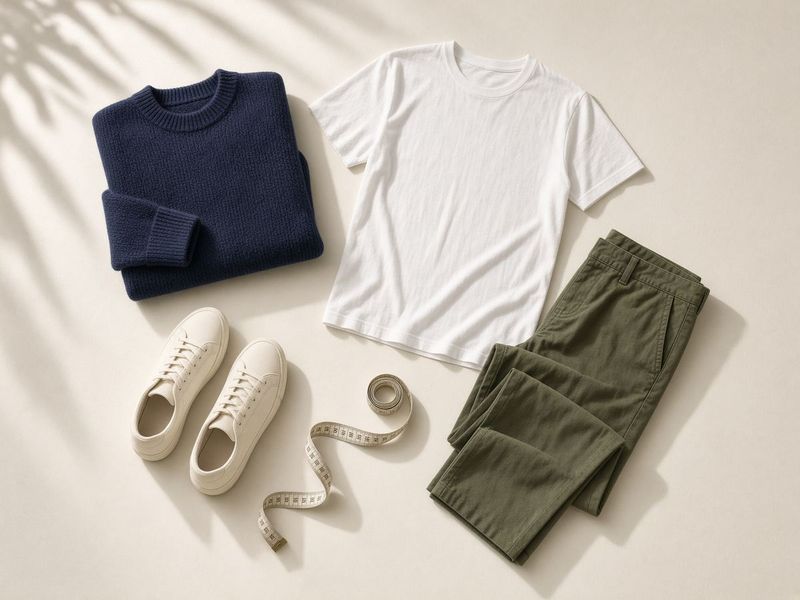
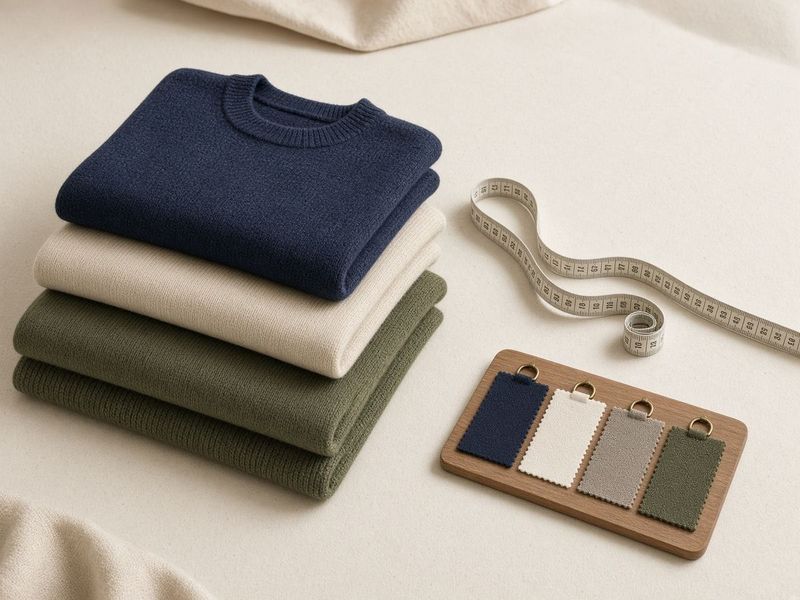
Twelve to eighteen pieces: two trousers or skirts that fit the waist now, two tops you can tuck, one knit, one overshirt or cardigan, one jacket, shoes you can walk in, a coat if the climate needs it. Navy, charcoal, cream, olive — the same quiet palette as a capsule so everything pairs.
Fabrics that earn the spend while size is in flux: merino (see merino versus cashmere), a cotton oxford, dark jeans with a little stretch. Avoid a $900 coat until the shoulder measurement has been stable for a season. A first suit can wait unless work demands it; when it does, use the first-suit guide and budget for alterations.
| Buy now | Wait | Why |
|---|---|---|
| Trousers / jeans that fit the waist | A wall of ‘goal’ denim | The waist is the number that moved |
| Merino knit, cotton shirt | A dozen printed tees | Layering beats volume |
| Shoes that match the new trousers | Heels from the old life ‘just in case’ | Hem length changed too |
| One jacket, tailored if needed | A tuxedo | Shoulders are stable; waist is not |
| Everyday bag | A new ‘reward’ wardrobe | One bag. The rest is delay. |
Alter, do not archive
A good tailor can take in a waist, shorten a hem, and nip a shirt. They cannot make a size-14 dress into a size-8 without destroying the drape. If the shoulder and length still match, alter. If the piece is a tent, donate it.
Underwear and bras are not optional extras. Band and cup move independently; use the bra-size guide instead of cinching an old band. Travel with a small set that fits now, not a suitcase of maybe — the travel capsule is the same idea with a suitcase limit.
Questions, answered
- Should I wait until my weight is stable?
- Buy a small set now. Waiting six months in clothes that do not fit is not cheaper. Re-buy the waist items later if you need to.
- What do I do with expensive old pieces?
- Photograph them, then sell or donate. Keeping a wardrobe of proof is how closets stay full and mornings stay hard.
- Can I just take everything to a tailor?
- Only if the shoulders and length still match. Taking a dress in four sizes is a new dress with extra holes.