Fit, knots, shoes
Blazer vs Sport Coat: Metal Buttons, Pattern, and Padding
A blazer is the navy jacket with metal buttons. A sport coat is the patterned odd jacket. Unstructured Italian construction is a different garment from a padded British one, even in the same colour.
Updated 16 Aug 2026 · 8 min read · blazer vs sport coat
Metal buttons versus patterned wool
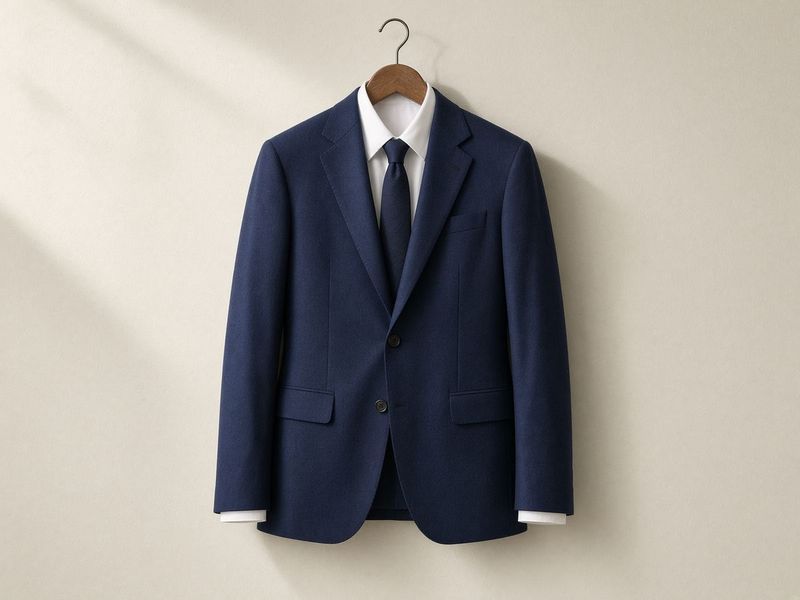
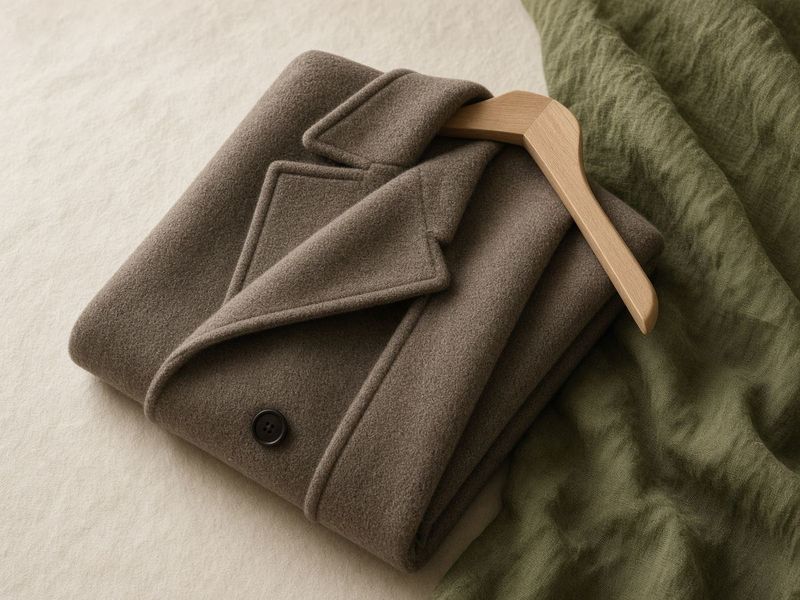
Metal buttons, navy cloth, often patch pockets, sometimes gold. That is a blazer. The metal is the tell. Horn, corozo, or plastic buttons on a navy jacket usually mean you are looking at a navy sport coat or a suit jacket pretending. A sport coat is an odd jacket with a pattern or a texture that is not “navy blazer”: tweed, herringbone, windowpane, gun club, barleycorn, hopsack in brown or olive. Buttons are horn or a dull plastic, not yacht brass.
The cloth is doing different jobs. Blazer cloth is navy hopsack, serge, or a smooth wool that can sit next to grey flannel and khaki without fighting. Sport-coat cloth is meant to look unlike your trousers — that is the point of “odd.” A 3cm windowpane that looked witty on a hanger looks loud in a fluorescent office. Buy the blazer first. Buy a quiet hopsack or herringbone sport coat second, after a navy suit or the blazer is already in rotation. Pattern is a commitment; metal buttons on navy are a uniform.
| Blazer | Sport coat | Suit jacket | |
|---|---|---|---|
| Cloth | Navy hopsack or serge | Pattern, tweed, texture | Matches the trousers exactly |
| Buttons | Metal, traditionally | Horn or plastic | Covered or matching horn |
| Trousers | Grey, khaki, olive, dark denim | Anything but a match | Only its pair |
| Construction | Padded or unstructured | Often softer, patch pockets | Matches the suit’s canvas |
Navy blazer rules that actually hold
Two-button or three-button, single-breasted, notch lapel. Metal buttons in brass, gilt, or a dark gunmetal — not enamel novelty, not four-button party cuffs you cannot unbutton. Patch pockets are traditional and more casual; flap pockets are a bit dressier. The jacket is navy, mid to dark, not midnight that photographs black and not a bright royal. Wear it with grey worsted, stone or navy chinos, olive cotton, or dark denim that is not distressed.
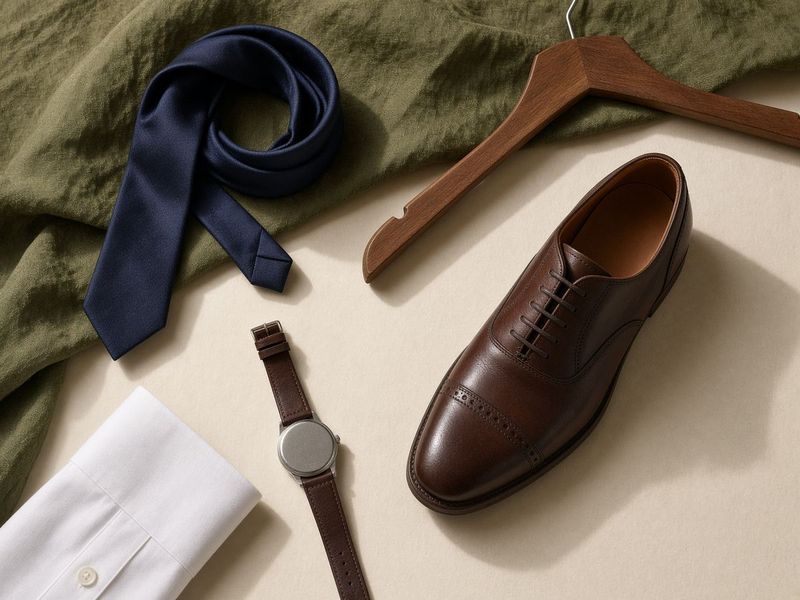
Do not wear it with matching navy trousers unless those trousers came on the same hanger — then you bought a suit, and you should treat it as one. Do not pair it with athletic sneakers, a baseball cap, or a matching navy knit that turns the whole thing into a costume uniform. Shoes: dark brown or black leather, a sleek derby or loafer, not a commando sole. See oxford vs derby if you only own one pair — a brown derby is the more useful weekday shoe under a blazer. Unfinished working sleeve buttons are a quality sign; fused chest canvas that bubbles after a year is not. Gold buttons are the tradition, not a flex. If they feel costume-y, buy a navy jacket with dark horn buttons and call it a sport coat.
Unstructured Italian versus padded British (and American)
Unstructured — the Italian, Neapolitan, spalla camicia family — means little or no shoulder pad, a soft chest, and a sleeve that is gathered into the armhole like a shirt. The shoulder follows your shoulder. It rolls, it wrinkles, it packs. A hopsack or high-twist wool in this cut, $400–900 from SuitSupply’s softer lines, Spier & Mackay, or a Neapolitan maker, is a warm-weather and smart-casual jacket. It looks wrong if you expect a boardroom line. It looks right over a polo or an open oxford cloth shirt.
Padded and canvassed — the British and American default — means a pad in the shoulder, a canvas (half or full) through the chest, and a cleaner sleevehead. The jacket holds a shape you may not have. That is the construction you want for a formal navy blazer and for any room that still uses the word “jacket.” Half-canvas in the $400–800 band is the honest buy; fused padding at $180 will bubble. A fully canvassed English blazer at $1,200+ is a second or third jacket, not a first. Do not buy unstructured thinking it will “dress up” into a suit substitute, and do not buy a heavily padded blazer to wear with jeans in July. Construction is the register, as much as the buttons.
Where each one sits in a wardrobe
A navy blazer is a capsule piece: it earns its keep against grey wool, khaki, olive, and dark denim, and it is the odd jacket you take to a dinner that said “jacket.” A sport coat is a personality piece. One quiet one (brown hopsack, grey herringbone, a small check in the palette) is enough until the blazer is boring because you wear it twice a week. A stray suit jacket is neither. When the trousers of a suit wear out, the jacket does not become a blazer — the cloth is too matchy, the buttons are wrong, and everyone can see the gap.
Fit still beats category. Shoulder seam where the shoulder ends. Button the top button of a two-button; leave the bottom open. If the button pulls a big X across your midsection, the jacket is too tight. An unstructured 48 that swims in the chest is not “relaxed”; it is the wrong size. Buy the navy two-button first, padded enough to hold a line, metal buttons, then decide whether your climate and your office want a soft Italian second jacket or a tweed.
Questions, answered
- Can I wear a blazer with jeans?
- Yes, with dark, clean jeans and leather shoes, not with ripped knees and white sneakers. Unstructured construction helps; a heavily padded boarding-school blazer over denim looks like two outfits.
- Are gold buttons too much?
- On a navy blazer they are the tradition, not a flex. If they feel costume-y, buy a navy jacket with dark horn buttons and call it a sport coat. Do not mix gold buttons with a loud check.
- Is a black blazer a thing?
- Rarely a good one. Black odd jackets read hospitality or funeral. Navy does the same job and plays with more trousers. If you need black, you probably need a suit.