Build it once
Bamboo Fabric Pros and Cons
Most “bamboo” cloth is viscose. Soft, drapey, and not the eco miracle on the hangtag.
Updated 26 Aug 2026 · 6 min read · bamboo fabric pros and cons
Name versus process
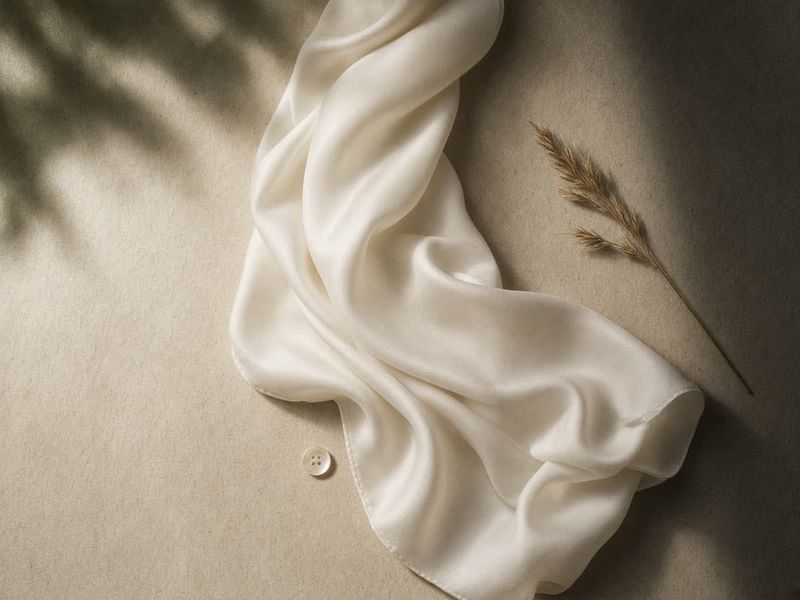
“Bamboo fabric” on a high-street tag almost always means viscose rayon made from bamboo pulp. The fibre is regenerated cellulose, chemically similar to viscose from beech or pine. Mechanically processed bamboo (bamboo linen) is stiffer, rarer, and more expensive. If the hand-feel is fluid and cold, it is viscose.
What it does well, and badly
Well: drape, softness, cool initial hand, dye uptake, cheap luxury feel. Badly: wet strength, pilling on sheets, shrinkage, and honesty in marketing. It is closer to satin’s slip than to cotton’s years-long thwack.
| Bamboo viscose | Cotton (long-staple) | Merino | |
|---|---|---|---|
| Hand | Fluid, cool | Crisp to soft | Springy, temperature-buffer |
| Pilling | Common on sheets | Low if long-staple | Low if high quality |
| Wash | Cold, gentle, hang | Wide range | Wool cycle or hand |
| Eco claim | Plant yes, process maybe | Water-heavy, known | Grazing, known |
Should it be in a capsule?
As a drapey camisole or a dress, yes. As the only bedding you own, no — a capsule wants fibres that survive a weekly wash. If you like the feel, buy one set, wash it as told, and see if it still looks like itself in six months.
Questions, answered
- Is bamboo more sustainable than cotton?
- The plant grows fast. Viscose production can pollute. Certified lyocell-style closed-loop is the version that earns the sentence. Uncertified viscose does not.
- Why did my bamboo sheets pill?
- Short fibres and friction. A fitted sheet on a rough mattress will pill any weak yarn.
- Bamboo socks?
- Fine for a season. Merino still wins for odor and shape.